Opens in a new tab
Categories Filter
  • 28/08/2015

    Post Link

    Where is the variance?

    I first came across this meme in a talk by Dylan Wiliam, but here is a quote from Andreas Schleicher, saying something similar:

    But just about a quarter of student performance variation lies between schools in the UK, while three quarters lie within schools, a share that is much larger than in other countries. In other words, educational underperformance isn’t just about poor schools in poor neighbourhoods, but about many schools in many neighbourhoods. 

    Wiliam uses this as an argument that what goes on in any particular classroom matters [most]. Teachers matter. My initial reaction was to imagine that such effects will be  much smaller in highed, but I can conceive of ways in which I might be wrong. If you think about medical education, there is (inevitably) focus on macro factors; course design, how the course is divvied up between specialty groups, IT support, and so on. But although lip service is paid to promoting ‘medical teachers’ (most of which is, in my opinion, misguided), we know little about what actually goes on in our classrooms, and even less about any relation between inputs and outputs. I am not certain we will ever get the appropriate figures, but think we should act as though we know the answer.

  • 27/08/2015

    Post Link

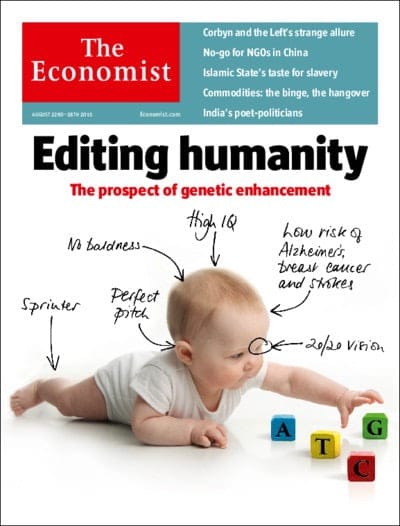
    Seems like the Economist is onto at least 4 of my defects.

    Seems like the Economist is onto at least 4 of my defects.

    editing humanity economist


  • 26/08/2015

    Post Link

    A declining institution often experiences survival of the unfittest

    A declining institution often experiences survival of the unfittest

    John McCarthy [direct link to this aside] 

  • 25/08/2015

    Post Link

    Worth a glance #20

    Surgical trainees seem unhappy (with good reason). Financial burden of surgical training  and  Why a career in surgery is no longer the golden ticket and Training to be a surgeon takes too long in the UK

    In Students’ Minds, Textbooks Are Increasingly Optional Purchases. See this quote : Publishers are pushing a new model, called an “integrated learning system,” in which students buy access to an online system that mixes reading materials, multimedia, and quiz and homework tools. I think some universities  are asleep.

    IBM Adds Medical Images to Watson, Buying Merge Healthcare for $1 Billion. I don’t know what to make of this, even though I have spent quite a few years trying to develop automated and semiautomated diagnostic systems. The old diagnostic melanoma systems looked promising, but they went no where — they were too brittle and lacking in robustness. And the size of training sets was far too small (by several orders of magnitude). On the other hand, if the total workflow is digital datasets can grow cheaply. A not in my lifetime moment? And Geoff Norman had some very cogent criticisms of the Watson approach to diagnosis, I remember.

    [Stop] US Universities From Hoarding Money ‘While nobody has suggested that quid pro quos were involved in these cases, these gifts highlight the symbiotic relationship between university endowments and the world of hedge funds and private equity funds.’

    Bullshit. FT article. Alive and well in my professional life


  • 24/08/2015

    Post Link

    Answering your wife via a spreadsheet

    Remember the trope: exceptions prove the rule. Well, in biology, it is mutants that are often informative. Not so much proving the rule, but hinting at what form any rule must take. In medicine, and maybe other subject domains, the best we can do is look for how things work at the periphery of a subject. At the centre, the causal pathways are so dense that understanding how things work is often beyond us. As we move away form the centre the density of causal arrows, and the pure weight of facts, diminish. It is easier to sort out the wood from the trees: our mental regression analyses have been pruned.

    The example that always impressed me was Jan Vandenbroucke’s editorial in the Lancer in 1995, ‘Homoeopathy trials: going nowhere.’ I have no idea how often it has been cited but to me it was the most important paper published in that decade. And unusually for medicine (sadly), it owed more to imagination, rather than ‘data collection’. The argument was as follows.

    1. Published metaanalyses or trials apparently showed that homeopathy ‘worked’.
    2. It is self-evident that if there are no molecules present in a therapeutic agent, then it cannot work. 
    3. Therefore, if your experimental methods show it works, then your methods are flawed.

    What Vandenbroucke had elegantly shown in a few hundred words was that the edifice of much EBM was flawed.

    The practical lesson, for me, was how important it is to have people scavenging around the unpopular bits of a subject domain, looking for data and arguments that are uncomfortable to those at the centre. I think if you want to look at much of modern medicine critically, you should look hard at psychiatry. I started many decades ago, when I was keen on psychiatry as a career, with Anthony Clare’s ‘Psychiatry in Dissent’, and David Ingleby’s ‘Critical Psychiatry (I read the first edition). Years later I discovered David Healy’s work (I started with the Pyschopharmacologists), Healy is somebody who thinks more deeply about medicine that almost anybody else I know. 

    This is all by way of introduction to a few quotes from a review of Neurotribes: The Legacy of Autism and the Future of Neurodiversity. By Steve Silberman. Avery; 544 pages; Allen & Unwin.

    “The American Psychiatric Association, which determines what ailments American insurance companies will pay to treat, classifies it [autism] as a disorder.” 

    “America’s Centres for Disease Control and Prevention thinks that one in 68 children in the country have at least a touch of autism, which if true means there are more autistic Americans than Jewish ones. “

    “He traces the prehistory of autism, which he argues persuasively was around long before it was given a name in the 1940s, and explains how a condition that now seems common is the product of ego-driven scientists and of the unusual circumstances in which they worked.”

    “German eugenicists, inspired by work in America, referred to such children as “useless eaters” and said the kindest thing would be to kill them. Asperger lost this argument, but continued his work in a place that made it impossible. One haunting image in the book is of his head nurse buried alive in Vienna by an Allied bomb, her arms wrapped protectively around a young patient.”

    “Kanner was so keen to make a brilliant breakthrough that he insisted that his discovery was new and rare, when it was neither. That bit of vanity might have been more forgivable had he not also speculated, on flimsy evidence, that the parents of autistic children were unusually cold. Time magazine ran a story headlined “Frosted Children” about these “Diaper-Age Schizoids”. The slur on refrigerator mothers took decades to fade.”

    “Perhaps the grimmest case Mr Silberman cites is of a child who would not stop crying being subjected to electroconvulsive therapy, after which he never spoke again. This sort of stuff is, thankfully, now largely forbidden. But most treatments for autism still inhabit the realm of chelation, supplements, strange diets and other junky science.”

    On a slightly lighter note, since my fear is that world will not end in fire, famine or pestilence but one giant bloody spreadsheet written by Human Resources, this anecdote about the great physicist Paul Dirac (who may have been part of the autistic spectrum) made me laugh. I will not be following his advice, however.

    Faced with some marital tension over his tendency to ignore his wife (and everybody else, really), Dirac constructed a spreadsheet where he could insert her queries and make sure he answered them properly, an arrangement that seems to have worked rather well for the Diracs.

  • 23/08/2015

    Post Link

    Praying on your phone: tech just gets everywhere.

    When pilgrims came to San Leonardo he would offer them—as the monks of old had done—a bed for the night, a share of his meagre dinner and a glass of the herb grappahe distilled himself. In the evening he would wander away both to pray, and to allow himself, twice a week, half an hour to pray with others on his mobile phone—for he was not entirely cut off from the traffic of the world.

    From an Obituary of Armando (Padre Pietro) Lavini, “God’s builder” [direct link to this aside] 

  • 21/08/2015

    Post Link

    The importance of forgetting and painful retrieval for learning

    This is another useful talk from HILT. One problem that bugs me with both undergraduate teaching and learning, and clinical expertise when you are qualified, is the dynamic between measures of competence at a defined time point, and the influence of exposure on the pattern of competence over time. People often assert that because you have some skill at timepoint X, that somehow ‘clinical exposure’ will maintain that skill over time ( I am not talking about revalidation here, simply because most accept as currently construed revalidation is not credible). However, keeping knowledge accessible is not just a function of formal learning, but a function of how often you encounter particular clinical problems. The dynamics are worth thinking about. To maintain competence for rare disorders, you must  encounter them at a certain rate. However, it seems to me possible that ‘routine clinical practice’  may not allow enough encounters to allow this competence to be maintained at the rate that is required. [So, the rate required to maintain competence, is greater than the rate at which you might routinely encounter the problem]. This is of course why we might use simulation, or attend clinical meetings, or spend much of our life talking about ‘cases’. If you want high level competence, you have to control the ratio of mundane to advanced case-mix. This is one of the reasons you need a hierarchy, and why a consultant delivered service, is not compatible with high level clinical competence (yes, I am skipping over a formal proof, here!). Some of this is at least tangentially related to this video by Robert Bjork — he of desirable difficulty). It is not exactly the rugby training mantra of no gain without pain, but something cognate; and that our tacit  yesteryear views of competence are being destroyed.

  • 20/08/2015

    Post Link

    Education’s a technical act, just like medicine

    This is from an old  Keynote given by Seymour Papert:

    I always keep in my mind the analogy with other areas where the computer presence has made a deep, real difference, and imagine what would happen if you took a physician or surgeon from the, even the 19th century, and time traveled, beamed that person into a modern operating room, he wouldn’t even know what is going on. But a school teacher beamed into a modern classroom would be a little surprised by some of the things happening, but basically would know what was going on and could even take over the class if need be (laughter).

    The fundamental question I want to pose –and I don’t want to give the answer – what I want to say is it’s a question that demands more attention than it has been given. The question is: Is that kind of megachange conceivable in the area of education, or is there something about education that means it’s never going to really change, and that’s sort of one way it becomes unrecognizable? You know – it’s a natural act, you might say, like eating. Whether your food comes from far away on an airplane, or it is cooked on an open fire or a microwave or not at all, eating is still putting it in your mouth, enjoying the company, enjoying the taste – basically the same. Is education like that? Well, maybe learning is like that. Education is not. Education’s a technical act, just like medicine.

  • 19/08/2015

    Post Link

    Caesar’s legions

    A YEAR ago a hospital in São Paulo announced that its maternity ward would henceforth only admit clients from 10am to 4pm, Monday to Friday. The message was clear: births by appointment only.

     The clue is in the name of the article: Caesar’s legions. [direct link to this aside] 

  • 18/08/2015

    Post Link

    Tips for new doctors

    Thankfully though, in another strange twist of events, situations in which you’ll have to make a decision won’t be as common as you think.

    From Tips for new doctors. Lots of other sensible comments too. [direct link to this aside]