Opens in a new tab
Categories Filter
  • 07/11/2017

    Post Link

    Android epistemology

    Geoff Norman has — as usual — a thoughtful editorial here. My clickbait version of it is:

    As anyone who has engaged in the culture wars between qualitative and quantitative researchers will attest, the debate between the two groups are unlikely to resolve anytime soon. …….To put it bluntly, at the risk of offending some, constructivists are going around the world making sweeping generalizations about how you can’t make sweeping generalizations.

    And I am glad he gives space to the Gigerenzer critique of some of the “heuristics and biases” school that has become so popular:

    While the definitions of the heuristics in Kahneman’s hands appear unequivocal, Zwaan et al. (2017) showed that purported experts are completely unable to agree on the presence or absence of specific biases, and conversely are themselves strongly influenced by hindsight knowledge of the outcome

    The foundations of research in medical education are not nearly as secure as many people wish to maintain. Plenty of physics envy to go around, and jobs to match.
  • 06/11/2017

    Post Link

    Childhood lost?

    Childhood, which is supposed to be the province of spontaneous play, has become highly administered, with parents and schools priming their human capital investments — children — for a merciless jobs market: “Between 1981 and 1997, elementary schoolers . . . recorded a whopping 146 per cent gain in time spent studying.”

    FT link here

  • 06/11/2017

    Post Link

    Rearranging the deckchairs

    Woodrow Wilson once remarked that it is easier to change the location of a cemetery than it is to change a curriculum.

    Via Jon Talbot, commenting on an article on the ?failures of online learning. I would only add the comment made by Henry Miller, in the context of medicine: curriculum reform, a disease of Deans.

  • 03/11/2017

    Post Link

    Cognitive prostheses

    This is a term I first learned from Clark Glamour and colleagues in Android Epistemology. Dermofit was a failed attempt to try and invent such a prosthesis.

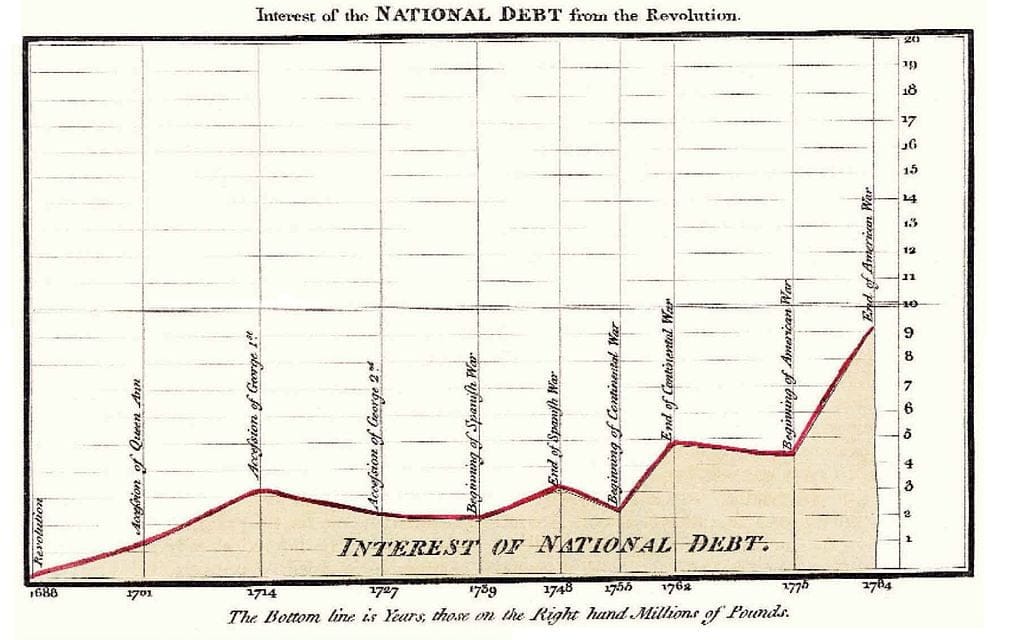
    Thinkers and thinking societies build tools that enhance their own thinking. When the speed of the positive feedback increases rapidly, we see a scientific and cultural revolution. When grit is put into the cogs or the base metals diluted, the opposite happens.

    Last week I was giving a talk about tech, medicine and medical education, and for the life of me could not remember the following example, showing how key representation is to our intellectual toolbox. Worse, I knew it had an Edinburgh connection. Wikipedia has more.

  • 02/11/2017

    Post Link

    How not to do it.

    I was sent links to both these videos together.

    The first is reasonable, but not grounded in reality. As AJP Taylor once said: 90% right and 100% wrong. It is what happens when all the context of a thesis has been stripped away. The second is both more grounded in reality and philosophically sound.

  • 01/11/2017

    Post Link

    Time 2

    Speaking at the Royal College of GPs’ annual conference in Liverpool on Thursday, he said: “The old model of 10-minute appointments doesn’t really work for patients with multiple long-term conditions who may need 30, 40, 50 minutes to get to the bottom of all their needs.”

    Link

    Awhile back, I read that a Danish primary care doc had been prosecuted because he had made key decisions about a patient based on a 10 minute consultation. In one sense I was cheered by this. But talking to Danish dermatologists last week, I am not so sanguine. It seems that yet more new ‘efficient’ IT is the weapon to degrade the consultation even further. Eventually there really will be no time to let the patient into the consultation room. And still the mantra of consultations skills for medical students will continue. All irony intended.

  • 31/10/2017

    Post Link

    Time

    Physicians have always been busy people, although they have generally controlled the way they use their time. In 1993, for example, family practitioners were seeing, on average, one patient every 20 minutes; general internists were seeing one every 26 minutes 1. These visit times were not long but perhaps were not unreasonable, particularly considering that they represented a mix of new and follow-up visits and that “fast” and “slow” British general practitioners had mean visit lengths of 7 and 9 minutes, respectively 2. Recently, however, the invisible hand of the marketplace has squeezed appointment schedules in an ever-tightening grip: In late 1995, 41% of physicians in an important U.S. survey reported that the amount of time they spent with their patients had decreased during the previous 3 years 3. This erosion of encounter time has taken its toll on physicians 1, 3. Moreover, it is equally distressing to patients because patients value their physicians’ “information giving” highly 4 and, as Howard Waitzkin has sensibly pointed out, “Information giving takes time. We cannot expect it to go well if we are too busy” 5. It does not take a rocket scientist (in the current parlance) to understand why both patients and their physicians have become increasingly dissatisfied as visit lengths have grown shorter 2, 6.

     Frank Davidoff, MD, Editor, Annals of Internal Medicine  , 15 September 1997 | Volume 127 Issue 6 | Pages 483-485

    The they invented electronic records with the purpose of…

  • 27/10/2017

    Post Link

    Old university towns

    I always find there is something appealing about old university towns. I am in Uppsala, a city I have visited for work on many occasions. Seems so small, and yet in reality it is Sweden’s fourth largest city. I was speaking at a mini-symposium on academic publishing, and how tech fits into the world of teaching clinical medicine.  But there is always some time to enjoy the sights— even as the days draw in.

  • 25/10/2017

    Post Link

    REF, TEF and now DEF

    Yes, the Digestive Excellence Framework (DEF) fro PhD students. And as sensible, too.

  • 24/10/2017

    Post Link

    Of Netflix and diagnoses

    This is from an article discussing the difficulties in recommending people to content they might like. The bigger picture is the dismal state of online journalism / news and polluters not paying. But Netflix’s understanding about how fine scale a taxonomy has to be, struck a chord with me. This is exactly the problem of diagnosis in some areas of medicine.

    The latter is my favorite. Four years ago, I realized the size and scope of Netflix’s secret weapon, its suggestion system, when reading this seminal Alex Madrigal piece in The Atlantic. Madrigal was first in revealing the number of genres, sub-genres, micro-genres used by Netflix’s descriptors for its film library: 76,897! This entails the incredible task of manually tagging every movie and generating a vast set of metadata ranging from “forbidden-love dramas” to heroes with a prominent mustache.

    This reminds me of the old story about how impressed somebody was, after being shown some small computing device that could ‘think’ using powerful algorithms. The observer did however ask about the aircraft hanger size machine that came with it: that was necessary to implement all the code for the exceptions to this universal reasoning machine, he was told.

    Lots of room too, for fake news and fake diagnoses.