Opens in a new tab
Categories Filter
  • 21/11/2017

    Post Link

    In a minute

    I have been (very!) busy updating skincancer909, sorting out typos and more egregious sins, and adding some short ‘in this chapter’ videos. Here is one, ‘The Clinician’s approach’. More will follow.


    The clinicians approach from jonathan rees on Vimeo.

  • 20/11/2017

    Post Link

    Make mine a Vesper

    The concept of continuity of care is important and with winter approaching rapidly in the UK, clinicians should lead the way in ensuring patients are looked after by the right specialist team, in the right place first time and avoid the ‘martini’ principle of hospital care – any time, any bed, anywhere. If we can reduce the number of boarded or outlying patients we will improve their care and also reduce overcrowding in the hospitals.

    Link


  • 17/11/2017

    Post Link

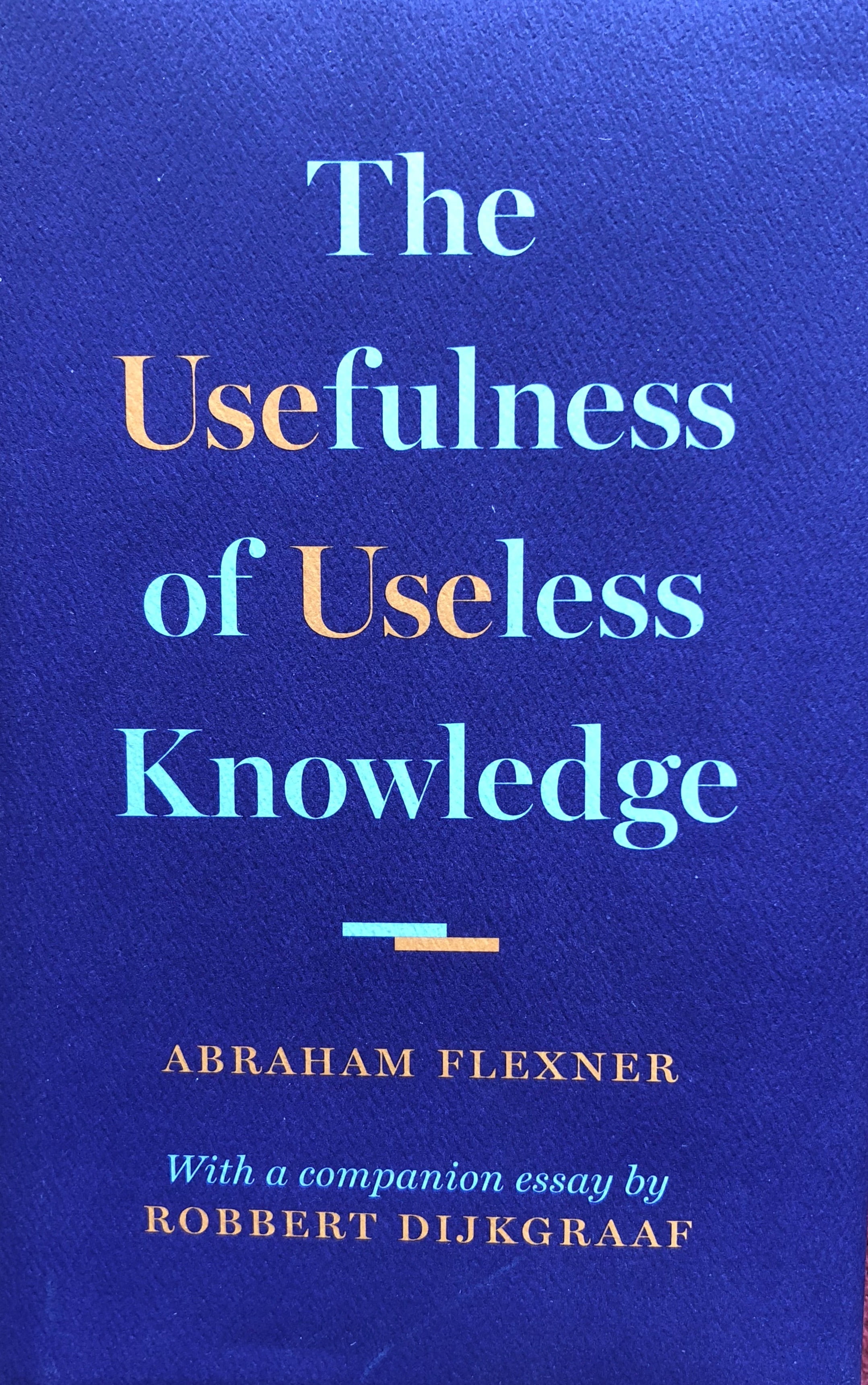
    Flexner: the flip side

    Abraham Flexner is of course famous in clinical medicine, for his report and influence on medical schools in the USA (and indirectly, the rest of the world). But I did not know of this book. A message I would strongly recommend to those regulators and their ilk who are shorting the future with ‘reforms’ and ‘competency’.


  • 16/11/2017

    Post Link

    No dwarf tossing here!

    Economics is perfectly capable of incorporating questions of morality, says Mr Tirole. It simply imposes structure on debate where otherwise indignation would rule. It might make sense to ban some markets, like dwarf-tossing,

    and before you get alarmed:

     [of dwarf-tossing] ….its existence diminishes the dignity of an entire group. But a market in organs or blood, for example, should not be rejected on the basis of instinctive moral repugnance alone. Policymakers should consider whether payment would raise the supply of donated blood or kidneys, improving or even saving lives. (It might not, if the motivation of money makes generous people afraid of looking greedy.) Whatever the answer, policymakers should make decisions from “behind the veil of ignorance”: without knowing whether any one person, including the policymakers themselves, would be a winner or loser from a particular policy, which society would they choose?

    From a review of “Economics for the Common Good”, by Jean Tirol in the Economist [link]. I assume the ‘veil’ reference is from John Rawls, an approach that I always like, but worry that I am missing something deeper.

  • 15/11/2017

    Post Link

    EMRs as polluters of the clinical workspace

    I like computers (see previous post), but despair of them in the clinical context of keeping medical records. By contrast nobody sane doubts that computers are advantageous in other medical contexts: imaging, radiotherapy, or even using an insulin pump. We don’t have problems with the latter instances, because self-evidently computers work, and they are the result of a culture of improvement. Not so with electronic medical records, where a neutral observer might thing that the purpose is to save money in one budget at the expense of diminishing clinical care in another. The economists might talk about externalities, but essentially many electronic record keeping systems are a form of pollution of the clinical workspace.

    The following quote caught my eye because, whilst in Scandinavia recently, a dermatologist from Denmark was expressing frustration with how bad their computer systems are; and how older physicians choose to ignore them by retiring early. I heard a similar tale from the US in the summer, from a dermatologist who takes a financial hit because he has not implemented electronic records. He says he can either manage patients or do IT (and yes, he is planning to get out early).

    Electronic medical records (EMRs) have resulted in increased documentation burden, with physicians spending up to 2 hours on EMR-related tasks for every 1 patient-care hour. Although EMRs offer care delivery integration, they have decreased physician job satisfaction and increased physician burnout across multiple fields, including dermatology.

    Here

    I would add, that I have read that the average ER doc on a shift in the US presses his mouse 4000 times.

    A long time ago, Richard Doll wrote an article pointing out that hospital record systems such as hospital activity analysis were perhaps useful to managers, but not much use for doctors or researchers. He was right, and I even published a paper saying similar things. My experience of electronic records in hospitals is that they are designed for the purpose of ‘management’ not clinical care. Contrary to what many say, these two activities have little in common, and share few goals. Our care system is not designed for care or caring, and our software is not designed for clinicians or patients. As for EMR, we are still waiting for our VisiCalc or Photoshop. If somebody  can pull it off, it would be worth  a Nobel.

  • 14/11/2017

    Post Link

    Of spreadsheets and the end of the world

    Today (Oct. 17) was International Spreadsheet Day, marking the day back in 1979 that VisiCalc first shipped for the Apple II. Creator Dan Bricklin devised the program originally to help him crunch numbers for an assignment at Harvard Business School. [Link]

    I dislike spreadsheets, and think the world will end not in fire, but in one giant bloody spreadsheet (or as a result of one). I also think they are a great metaphor for what is often wrong in medicine: an Excel spreadsheet can calculate a PASI (pissing awful psoriasis index, in lay terms) but it cannot tell you when somebody has bad psoriasis. People get confused about the epistemology here.

    But these comments are a little sour. I have never really had to use spreadsheets, instead preferring to use something like R for when I have need of matrices, or when I was really young, FORTRAN. And to be fair even then, I would (now) need to go via a spreadsheet / csv file to enter the data. And this ignores the fact that mostly spreadsheets are used as static tools to present multicoloured tables rather than do calculations. But spreadsheets were, and are, revolutionary. I knew of Dan Bricklin, their inventor, but not all of the following story about how he invented then because he needed them to carry out a set assignment at Harvard Business School

    Bricklin knew all this, but he also knew that spreadsheets were needed for the exercise; he wanted an easier way to do them. It occurred to him: why not create the spreadsheets on a microcomputer? Why not design a program that would produce on a computer screen a green, glowing ledger, so that the calculations, as well as the final tabulations, would be visible to the person “crunching” the numbers?

    Why not make an electronic spreadsheet, a word processor for figures?

    Bricklin’s teachers at Harvard thought he was wasting his time: why would a manager want to do a spreadsheet on one of those “toy” computers? What were secretaries and accountants and the people down in DP for? But Bricklin could not be dissuaded. With a computer programmer friend from MIT named Bob Frankston, he set to work developing the first electronic spreadsheet program. It would be contained on a floppy disk and run on the then brand-new Apple personal computer. Bricklin and Frankson released VisiCalc (the name was derived from Visible Calculation) in late 1979.

    There are some general points. Advances are often made by tool makers; and the best fillip for great software is a problem you personally need to solve (a point Paul Graham makes repeatedly). And of course, people who know better, will not think your efforts worthwhile. Little of this is true of hospital information systems.

    Here

  • 13/11/2017

    Post Link

    Communication breakdown

    Nevertheless, recent reviews find little evidence that cancer patients benefit after clinicians are taught communication.9, 14-16 Although training can change clinicians’ communication, for instance by increasing open questions or empathic statements, effects on patients’ satisfaction, well-being or clinical outcomes have proved elusive. The reviews’ authors recommend improved research designs in a continued effort to show that training does help patients. However, there are concerns that expert guidance on communication is often unrealistic,17-21 and many clinicians and students remain sceptical of it.11, 20, 22-31 Moreover, social scientists have challenged assumptions on which communication education and guidance in cancer and across health care are based.32-34

    Here And letters too here. Musical appreciation below (Page starts at 1’16”):


  • 10/11/2017

    Post Link

    IPR matters

    Allergan has been particularly aggressive in trying to skirt the IPR system. In September, it took the unprecedented step of transferring patents protecting its prescription eyedrop, Restasis, to the Saint Regis Mohawks. The tribe — which received a $13.5m fee and up to $15m in annual royalties — then claimed it had sovereign immunity from intellectual property challenges launched through IPR. 

    Pharma industry faces hypocrisy charge over patents

    As I fond of repeating, Martin Wolf of the FT argued that Pharma may soon be shown the same contempt that many now feel towards the Banks.

  • 09/11/2017

    Post Link

    Screwing people as the social norm

    “Whenever a company decides it’s ok to screw its suppliers, its customers, or its employees, it is only a matter of time until it gets around to screwing all 3 groups. That is because the idea that screwing people is ok becomes the corporate mindset.”

    Comment by Howard on I, Cringely

  • 08/11/2017

    Post Link

    Marriage

    Marriage, however, proved to be a towering practical problem — Princeton, where Feynman was now pursuing a Ph.D., threatened to withdraw the fellowships funding his graduate studies if he were to wed, for the university considered the emotional and pragmatic responsibilities of marriage a grave threat to academic discipline. [Here]

    The above is about Richard Feynman, but reminds me of a story closer to home, told to me by a consultant dermatologist (who I will call CS) and former academic. CS, then a senior registrar, on entering the departmental library, was pleased to see the elderly professor reaching for books on the top shelf. CS, with evident pride, told the professor that he had good news: he was engaged to be married. The professor replied: ‘Sorry to hear that CS, I had high hopes for you’.