Opens in a new tab
Categories Filter
  • 09/10/2018

    Post Link

    Humankind and mediocrity

    Premature optimization, noted Donald Knuth, is the root of all evil. Mediocrity, you might say, is resistance to optimization under conditions where optimization is always premature. And what might such conditions be?

    Survival of the Mediocre Mediocre

    I think this speaks to the value of conscious thought over reflex.

  • 07/10/2018

    Post Link

    Publishers and universities.

    It is easy to make facile comparisons between universities,  publishing, and the internet. But it is useful to explore the differences and similarities, even down to the mundane production of ‘content’.

    This is from Frederic Filloux form the ever wonderful Monday Note

    Dear Publishers, if you want my subscription dollars (or euros), here is what I expect…

    The biggest mistake of news publishers is their belief that the presumed uniqueness of their content is sufficient to warrant a lifetime of customer loyalty.

    The cost of news production is a justification for the price of the service; in-depth, value-added journalism is hugely expensive. I’m currently reading Bad Blood, John Carreyrou’s book about the Theranos scandal (also see Jean-Louis last week’s column about it). This investigation cost the Wall Street Journal well over a million dollars. Another example is The New York Times, which spends about $200 m a year for its newsroom. The cost structure of news operations is the may reason why tech giants will never invest in this business: the economics of producing quality journalism are incompatible with the quantitative approach used in tech which relies Key Performance Indicators or Objectives and Key Results. (

    In France, marketers from the French paid-TV network Canal+ prided themselves of their subscription management: “Even death isn’t sufficient to cancel a subscription,” as one of them told me once.

  • 06/10/2018

    Post Link

    Millennials

    As the joke goes, everyone hates millennials until they need to convert a PDF document into Word.

    Edward Luce.

  • 05/10/2018

    Post Link

    Politics as a dominant negative mutation.

    If Scotland offers a lesson in how to shift the behaviour of a higher education system at speed without resorting to bribes, it is that keeping institutions in a state of anxiety about their financial future and in competition for political favour can be very effective. There are also echoes of 2013, when student grants were cut while spending on tuition fees was protected. Now, the evidence points to disadvantaged young people outside SIMD1 areas being squeezed most, even while the SIMD1 figures are being successfully driven upwards. Yet again in Scottish HE, the rhetorical investment in free tuition is casting its long shadow, and being in or out of the political spotlight makes all the difference.

    WONKE

  • 04/10/2018

    Post Link

    Theory follows practice

    When working in Africa in the 1980s with my good friend Victor Pretorius, I heard a legend about an important tribe in Central Africa, the Masai. The legend claimed that a genius member of the tribe in the nineteenth century or earlier had the idea that cow’s urine was the safest fluid for washing cooking utensils. Compared with the previous practice of using far from clean river water, it avoided the dangers of dysentery and probably saved many lives. This simple and effective public heath practice was cast out by medical missionaries who had quite different ideas, more religious than medical, about what was clean and what was dirty. Neither the original genius, nor the missionaries, knew anything about the epidemiology of water-borne disease. Whether or not there is any substance to this legend, it has stayed in my mind as a metaphor appropriate for many of our problems today. Inventions such as Newcomen’s steam engine, Faraday’s electrical machines, and the idea that fresh urine is a sterile fluid, all came long before their scientific understanding.

    James Lovelock, A Rough Ride to the Future. This is like so much of real discovery in clinical medicine, although the academy gets to write the history of how it is supposed to work.

  • 03/10/2018

    Post Link

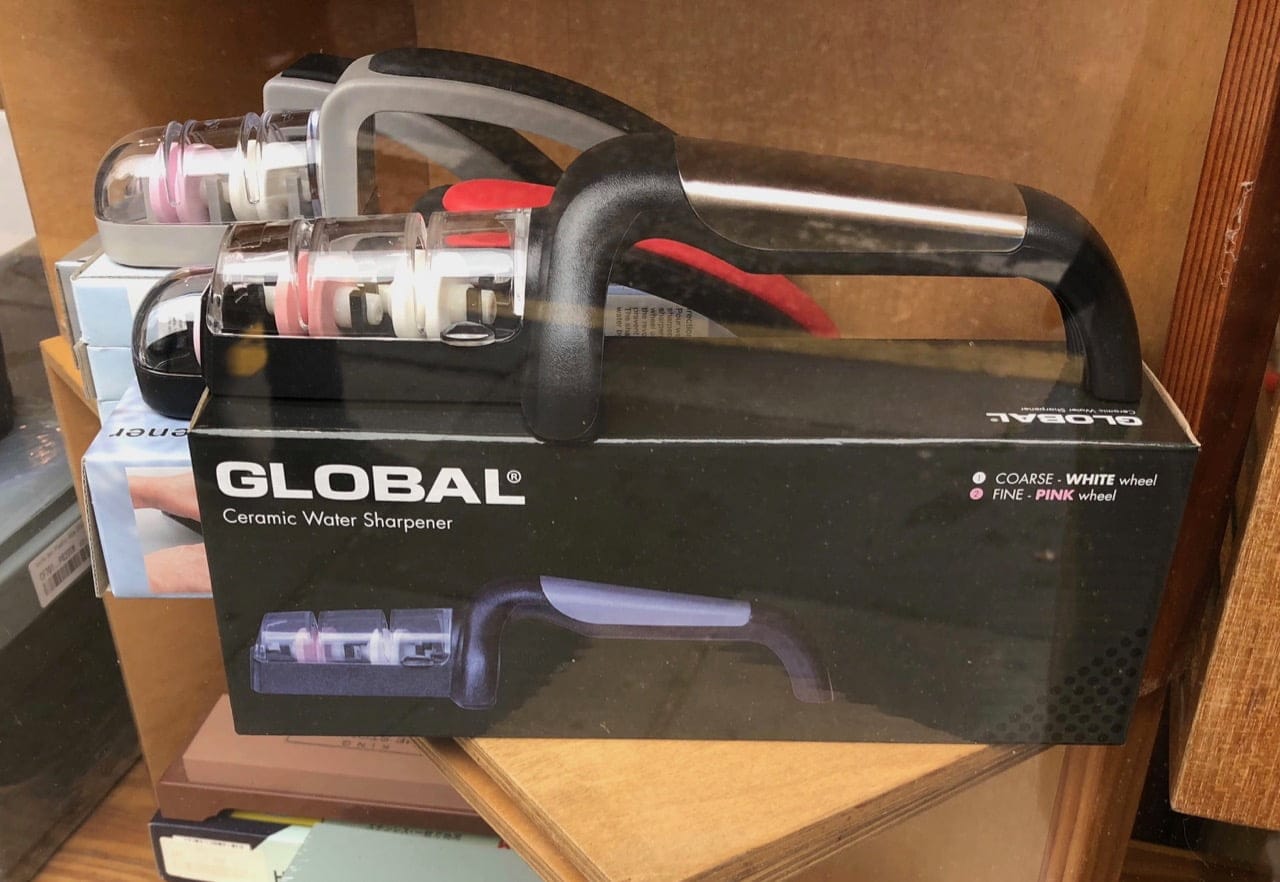
    A tool for water sharpening?

    It just puzzled me…


  • 02/10/2018

    Post Link

    The gig economy

    Joe plays guitar in a metal band – averagely well for a 20-year-old – and is enrolled on a music degree course at a post-92 university whose most pressing issue is its own surviva. He didn’t have to audition and there was no real interview. He was told what to expect, but he didn’t fully internalise the message that he’d be better off if he could read music.

    The problem is that the delivery and even the content of the courses these days are centrally informed by student feedback, which goes straight to middle management. If some students say that there’s too much classical music, modules get chopped. Coursework is dumbed down. New modules are frowned on (students walk away from the unfamiliar). Feedback is narrowly prescribed, and entered on to tick sheets. The spectre of student complaint lurks at every corner.

    This wholesale embrace of populism in pursuit of higher recruitment and satisfaction numbers irons out musical minorities and marginalises any sense that music is a value in and for itself. Gone is the idea that study can (and should) be difficult at times, and certainly not always concerned with what is most immediate. Gone is the possibility of a musical democracy based on a critically informed public.

    This article is about Music Degrees, but many in Higher Education will recognise the tune.

  • 01/10/2018

    Post Link

    Crash landing

    Europeans may wish to opt out of the global battle for corporate domination. They may even hope that they may thus achieve a greater degree of freedom for democratic politics. But the risk is that their growing reliance on other people’s technology, the relative stagnation of the eurozone and the consequent dependence of Europe’s growth model on exports to other people’s markets will render those pretensions to autonomy quite empty. Rather than an autonomous actor, Europe risks becoming the object of other people’s capitalist corporatism. Indeed, as far as international finance is concerned, the die has already been cast. In the wake of the double crisis, Europe is out of the race. The future will be decided between the survivors of the crisis in the United States and the newcomers of Asia.44 They may choose to locate in the City of London, but after Brexit even that cannot be taken for granted. Wall Street, Hong Kong and Shanghai may simply bypass Europe.

    From: ‘Crashed: How a Decade of Financial Crises Changed the World’ by Adam Tooze. This book brings to my mind Alan Kay’s comment when he was awarded the Turing Prize:’the computer revolutions hadn’t happened yet’. I don’t think we have even begun to live through the worst of the Crash (yet).

  • 29/09/2018

    Post Link

    Carrot weather gets it right again

    Facebook accounts hacked? I thought that was the feature not the bug.

    Carrot weather — the weather app with attitude.

  • 26/09/2018

    Post Link

    Dissatisfaction with the status quo

    Marie Curie said: “One never notices what has been done; one can only see what remains to be done.”