UK science policy
The government thinks if you pump up UK science with a verbal diarrhoea of optimism – it can somehow become a self-fulfilling prophecy.”
Andre Geim of the University of Manchester

29/11/2021
Post LinkThe government thinks if you pump up UK science with a verbal diarrhoea of optimism – it can somehow become a self-fulfilling prophecy.”
Andre Geim of the University of Manchester
29/11/2021
Post Linkhigher education had become just too important to be allowed to be free
Free: as in free speech rather than free beer.
Peter Scott in Times Higher Education: 50 years of critical friendship | Times Higher Education (THE)
22/11/2021
Post LinkWang Xiuying · Losing at the Starting Line: Nine Nine Six Culture · LRB 18 November 2021
Children start taking extra classes when they’re still at primary school. Chinese (language and literature), maths and English are the cornerstones: they are compulsory subjects in the gaokao, the College Entrance Exam, which students take in their final year of school and is the sole criterion for university admission (you can do another language, but hardly anyone does). The Olympic Mathematics Class is popular with primary school pupils who show an early interest in the sciences. In a big city like Shanghai or Beijing, one-to-one maths tutoring for young children can cost 500 RMB per hour (the average wage in big cities is around 50 RMB per hour). As well as academic tutoring, singing, dancing, piano, violin, swimming and badminton classes are also hugely popular. A private piano lesson taught by a conservatoire professor can cost 2500 RMB per hour. Middle-class parents often joke (not without bitterness) that their child is shredding money before their eyes.
She is a typical Gen Zer: can’t stick a job for more than a year (‘too boring, salary no good’) and has absolutely no desire for a family (‘taking care of myself is hard enough’). Women who do want a family have to prepare long before the wedding. In big cities, the downpayment on a decent apartment would empty six bank accounts (the couple plus all four parents). Occasionally viral clips circulate of random street interviews. The interviewer asks a passerby: ‘You’re about to divorce. Do you choose the house or the children?’ Most men choose the house because houses are too expensive to buy again. You can always find another wife and have another child if you have the house. Most women choose the children.
23/10/2021
Post LinkMenthol cigarettes were first promoted to soothe the airways of “health conscious” smokers. Long used as an analgesic, menthol evokes a cooling sensation that masks the harshness of tobacco smoke. In the competition to capitalize on the growing menthol market, the industry’s marketing experts “carved up, segmented, and fractionated” the population, exploiting psychology and social attitudes to shape product preferences.
[emphasis added]
23/10/2021
Post LinkStephen Sedley · A Decent Death · LRB 21 October 2021
A sharp pen from Stephen Sedley, a former appeal court judge, in the LRB.
Absurdly and cruelly, until the 1961 Suicide Act was passed it was a crime to kill yourself. While those who succeeded were beyond the law’s reach, those who tried and failed could be sent to jail. In the 1920s the home secretary had to release a Middlesbrough woman with fourteen children who had been given three months in prison for trying to kill herself. There is a Pythonesque sketch waiting to be written about a judge passing a sentence of imprisonment for attempted suicide: ‘Let this be a lesson to you and to any others who may be thinking of killing themselves.’ In fact, by the mid 19th century the law had got itself into such a tangle that a person injured in a failed attempt at suicide could be indicted for wounding with intent to kill, an offence for which Parliament had thoughtfully provided the death penalty.
But the repeated resort by doctrinal opponents of assisted dying to the need for safeguarding tends to be directed not to resolving any difficulties but to amplifying and complicating them to the point of obstruction – the kind of argument which, as Gore Vidal once put it, gives intellectual dishonesty a bad name.
[emphases added]
19/10/2021
Post LinkWithout an economic plan, patriotism is Boris Johnson’s last refuge | Financial Times
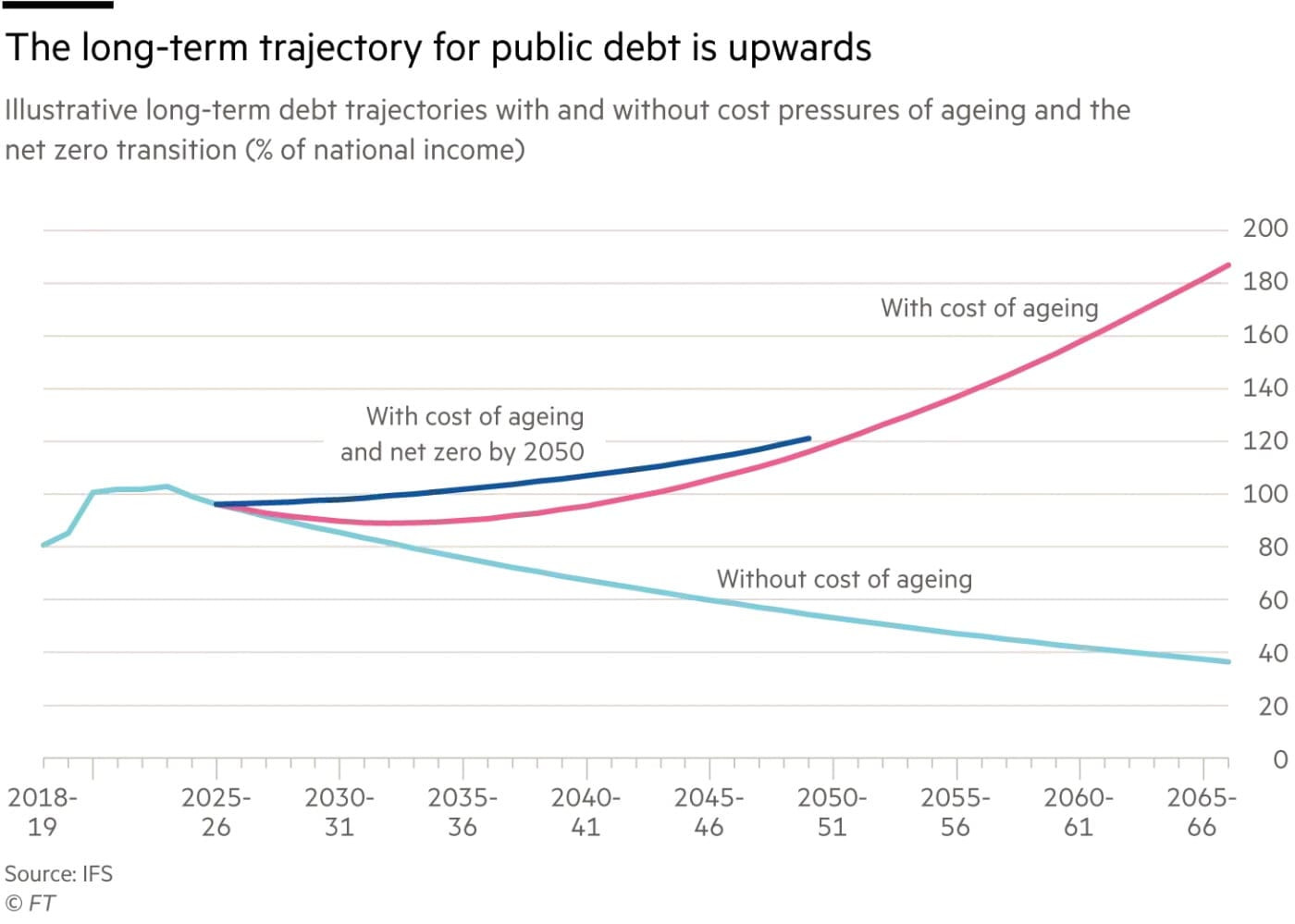
Martin Wolff writing in the FT today.
Yet does this really matter? One used to think that economic performance was crucial to political success. Now we know there are alternative political tactics. If economic outcomes and fiscal largesse disappoint, Johnson can return to what has worked so well since 2016: the battle of undaunted Britain against the despotism of Brussels. Indeed, we are already seeing just this in his attempt to rewrite the agreement he reached over Northern Ireland just over two years ago.
In the last resort, blame what is wrong on foreigners. This has worked so far. But the patriotism card surely cannot work its magic forever.
15/10/2021
Post LinkCovid PCR tests: at least 43,000 in UK may have had false negatives | Coronavirus | The Guardian
What a great name for a public health doc?
Dr Will Welfare, the public health incident director at UKHSA, said: “There is no evidence of any faults with LFD or PCR test kits themselves and the public should remain confident in using them and in other laboratory services currently provided.”
14/10/2021
Post LinkThe west is the author of its own weakness | Financial Times
What Trump understood, as did populists elsewhere, is that the voters’ respect for established politics is rooted in a bargain. Public faith in democracy — in the rule of law and the institutions of the state — rests on a perception that the system at least nods towards fairness. There have been reforms to that end since the crash, but little to suggest they are enough.
There was nothing wrong with the ambition of the post cold war optimists. It remains hard to see how the world can work without liberal democracy and a rules-based international system. What the optimists missed then, and the China watchers overlook now, is the hollowing out of trust in democracy at home. Of course, China is a potential threat. A second presidential term for Trump would be a much more dangerous one.
It may be that history will conclude that the excessive optimism of the 1990s is being mirrored today by too much pessimism. That’s a judgment I intend to leave to others. For a political commentator, 25 years in the same slot is long enough. So this is my last column. I will continue to write from time to time as an FT contributing editor, but otherwise intend to go in search of a better understanding of, well, history.
Philip Stephens
14/10/2021
Post LinkIt was not deliberate policy; it simply seemed to be only men who applied, usually refugees from the twin miseries of academia: low salaries and high tables.
The Fear Index. Robert Harris
14/10/2021
Post LinkEvery time I hear the term line-manager used by or about an academic, retirement gets a day closer.
I once wrote.